


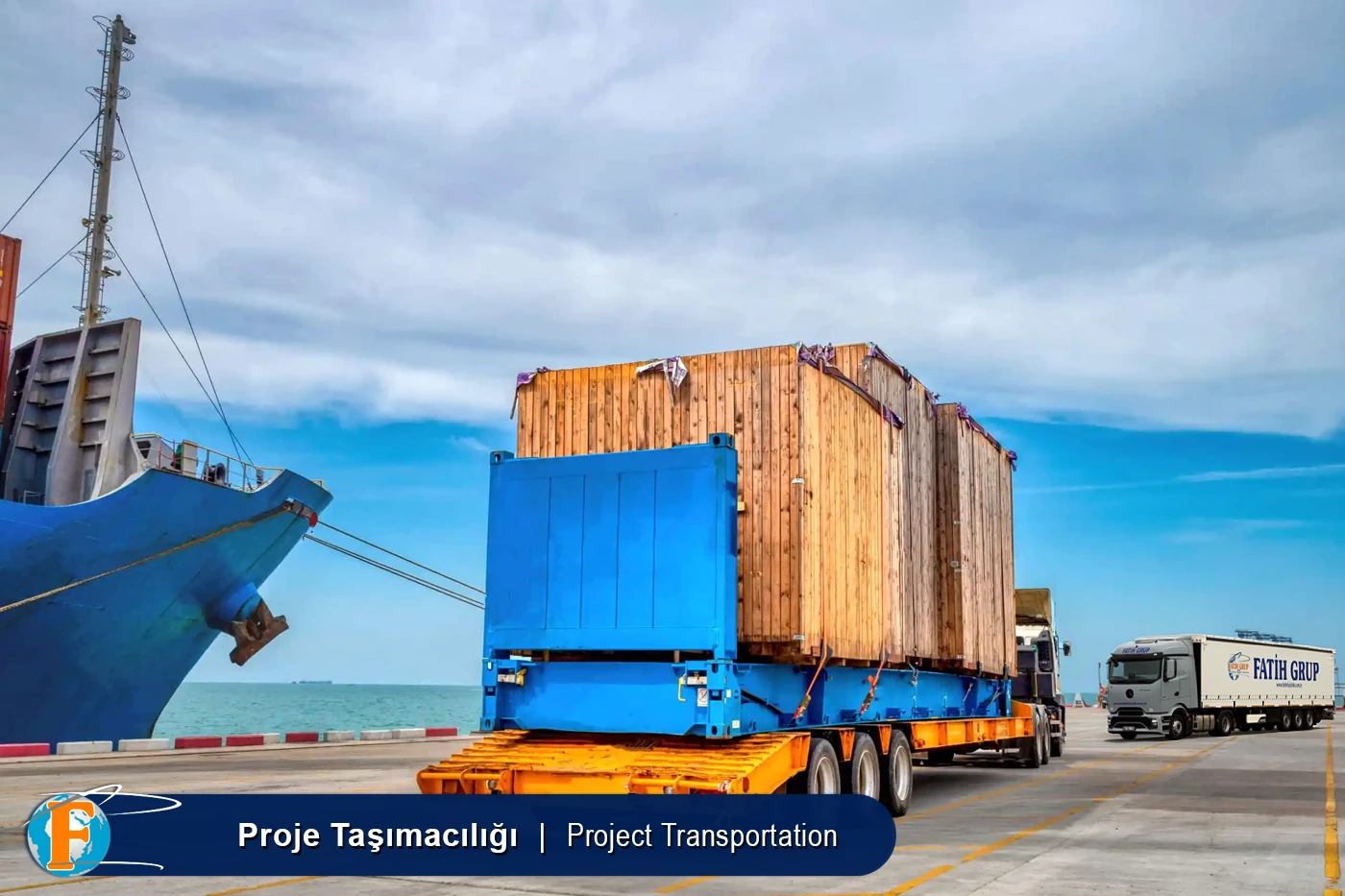
Project Transportation
A wind turbine propeller can be 80 meters long. A transformer weighs 200 tons. A factory line has to be moved in one piece. Such loads remain beyond the -normal- logistics processes. Here, project transportation comes into play.
Many people think that -Project transportation is only for large construction companies-. However, small and medium-sized enterprises may also need this service when setting up a production line, buying equipment for a power plant, or as an exporting machine manufacturer.
As Fatih Group Logistics, we have been looking for a way to make such extraordinary shipments ordinary since 2006. Because for us, every project is not just a cargo, but a responsibility.
What is Project Transportation and When is it Necessary?
In a nutshell: It is the planned, coordinated and risk-analyzed transportation of multi-part or critical cargoes that do not fit into standard containers and require special transportation conditions.
You should consider project transportation if:
- Your load is oversized (in terms of height, width or length)
- Weight over 50 tons
- Requires precise assembly or is affected by vibration
- Multiple modes of transport (sea + land + rail) are used together
- Customs requires special permits or road closure permits on route
For example, last year we carried a 120-ton power plant transformer from Ankara- to Kazakhstan- for one of our customers. Along the way, bridge load capacities were checked, night flights were planned, coordination with local authorities was established. The result is? It's a smooth delivery.
What kind of process is followed?
Project transportation does not work with the logic of -let's send it. Each step is pre-simulated:
- The technical evaluation: Dimensions, center of gravity, precision of the load are examined in detail.
- Analysis of route: Bridge heights, bend radii, traffic density, weather... it's all mapped out.
- The permission process: Coordination is ensured with provincial special administrations, highways, municipalities and customs.
- Selection of conveying equipment: Special equipment such as modular trailers, low platform trucks, crane vehicles come into play.
- Real-time tracking: Location information is shared at any time with GPS-supported tracking.
The state-of-the-art Mercedes trucks in our fleet are specially equipped for such demanding tasks. If necessary, we also cooperate with 3rd party expert teams.
Wouldn't the cost be too high?
The right question, but the answer may not be what you expect.
Yes, project transportation requires more detailed planning than standard shipments. But if you look at it in terms of risk management, the cost is actually It falls down. Because of:
- Hidden costs such as tripping, return or damage on the road are eliminated.
- Time loss is minimized (especially in construction projects, delays can cost millions).
- Insurance premiums are more advantageous when working with professional carriers.
We answer the question - to - in a transparent way by offering a cost analysis specific to each project.
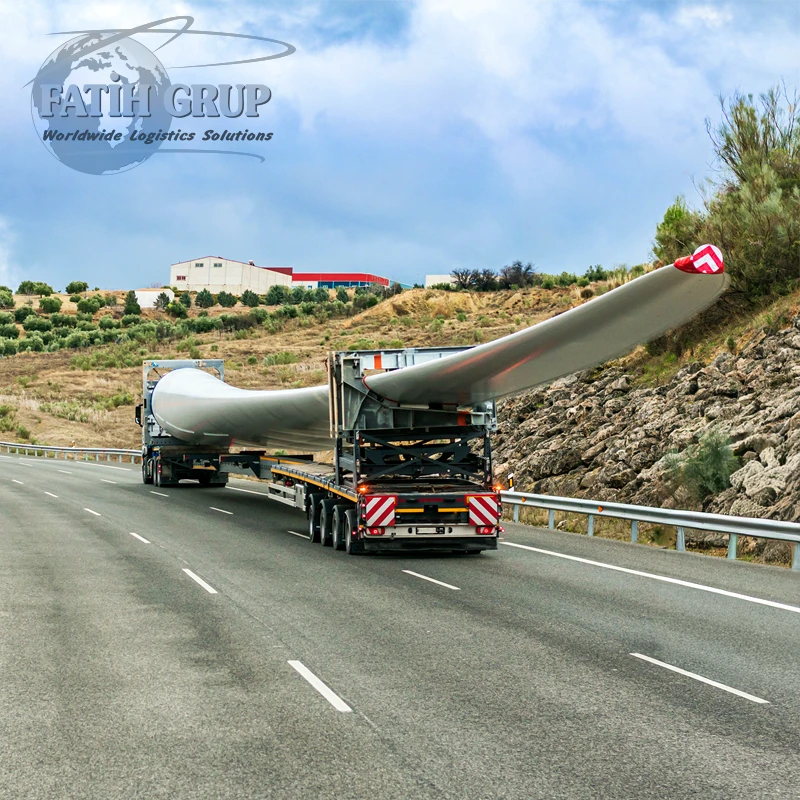
Project Logistics of the Future: Digital and Integrated
Today, 3D routing software, drone-assisted field investigations and artificial intelligence-based risk estimation models are used in project transportation. As Fatih Group Logistics, we integrate these technologies into our processes and offer more precise and safe solutions to our customers.
In addition, Turkey's location in both Europe and the Middle East and Central Asia provides a strategic advantage in project transportation. We use this opportunity in the most efficient way, especially in the energy, defense and infrastructure sectors.
Extraordinary Loads, Requires Extraordinary Partner
Project transportation is not only the meeting point of - transport- but also engineering, diplomacy, logistics and experience.
As Fatih Group Logistics, we offer road, sea, railway and airport integration under one roof with our Ankara-based team and Istanbul branch. Great projects require great responsibility.
If you are planning to carry a special load, take the first step: Get in touch with us. Let's plan the rest.